
Social Learning Theory: What Is Your Team Learning Vicariously?
Your team is learning leadership vicariously from what you do, not what you say.
People learn what's actually rewarded in a workplace by watching leaders when they're not 'on' rather than by reading the values posters on the walls in the hall.
Psychologists call this vicarious learning, and it explains why a business's real organisational culture rarely matches the one written down.
If you want to know what your team has learned from you this month, you won’t find it in a policy doc. More likely, it’s what they've seen you do on a bad day.
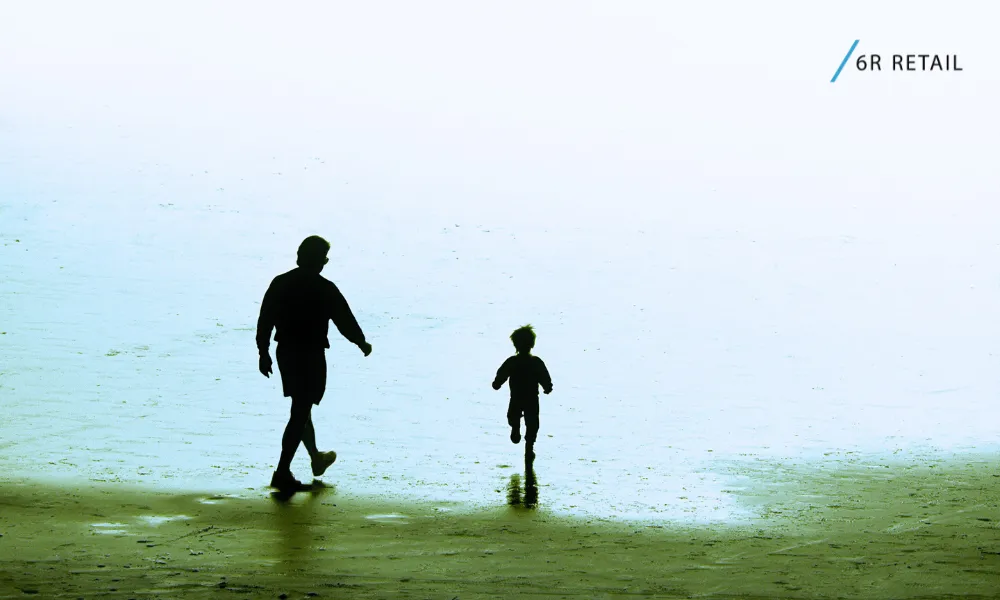
Sunday morning running
Almost every Sunday, for about six years, I ran the same loop. And most of those, I'd pass the same bloke, running with his son. I used to call this kid "mini me."
They had the same hair colour, same long limbs, same gait, same serious face pointed dead ahead. He was a little version of his dad. Some weeks I'd think, what an act of dedication, that this dad brings his son along every single week, rain, hail or shine. For me, the run was my quiet thinking time.
Other times I felt for the kid. Did he choose this? Or did he just get folded into his dad's routine before he was old enough to express an opinion?
I don’t know their names. I don't know how long they ran for, or whether it was a chore or a choice for early mini me. I know nothing about them beyond twenty seconds of passing on the footpath, once a week, for years.
Then a few weeks back, I saw the kid. He's not a child anymore. Taller than his dad, running stride for stride with what looked like his sister, or maybe a girlfriend. Dad wasn't there.
What does vicarious learning cost leaders?
After not seeing them for so long, it struck me: I'd become an unwitting observer in their lives, a stranger on the same road.
But I felt like I'd been there for part of the journey, making up stories, drawing conclusions, thinking about consistency and modelling, without either of them even knowing I existed.
Social learning theory, first formalised by Albert Bandura, says people learn norms and acceptable conduct largely by observing leaders and high-status peers, not by reading policy documents.
It is one of the ways organisational behaviour and workplace culture are shaped.
Charles Manz made the same case in the Academy of Management Review: day-to-day, often unplanned modelling shapes organisational behaviour just as powerfully as formal training. Whether a 'model's' behaviour is copied depends on how competent and successful that person appears to the observer, whether or not the observer says so. It's a behavioural theory that plays out in ordinary moments, often without anyone consciously recognising it as leadership at all.
We think leadership influence only happens in the room, in the meeting, in the moment we're 'on.'
It doesn't.
Someone is always running past.
I saw the same thing play out with a retailer; their ERP implementation had dragged on, the business had acquired new brands mid-project, moved offices, and organisational change was happening alongside mounting pressure to go live from every direction. By chance, I sat in on the meeting where the project team decided whether they were ready. The COO, as sponsor, went around the room asking each team leader for a decision.
Every single one raised concerns. Every single one was talked out of them. He negotiated, reframed, and optimism-talked his way past every objection until the room gave him the 'go' already decided on. Nobody in that room needed a values memo to learn what happened to unwelcome delays around him. They'd just watched it.
What does vicarious learning cost leaders and their workplace culture?
The junior team member who saw how you spoke to the barista before the meeting. The stakeholder who noticed you replied to an email at 11pm and took note of what 'urgent' means for you. The new hire clocked, in their first fortnight, whether disagreement in your meetings gets welcomed or punished, long before you ever articulated it to them.
None of those are formal training moments.
There's no feedback loop, no chance to explain yourself, no HR module to contextualise the exception. It's just being observed, once a week or once a day, twenty seconds or minutes at a time, and it adds up to the culture, the trust, and the followership you actually have. Whether or not it's the one you think you're building.
We've all walked past posters and policies that aren't enacted anywhere in a business. That gap exists because the leadership behaviour people observe (and then repeat) is how the business really works, not the laminated values statement on the wall.
We often talk about the characteristics of good leaders or effective leaders. Many of the most important flaws and features are revealed in the moments no one intended. Behavioural leadership skills aren't just demonstrated when a leader is consciously leading. They're visible in small, everyday interactions that we barely consider.
The tension leaders find hard to resolve
This is harder than just 'model good behaviour.' The same thing that builds trust over years of consistent, unobserved conduct also means people draw permanent conclusions from moments you never get to correct. You don't get a rebuttal. There's no meeting where you explain that the 11pm email was a one-off, or that the sharp tone with the barista was on the back of a bad morning, not who you usually are.
Observers don't wait for context. They pattern-match, and one bad day can calcify into 'how things really work around here' just as easily as six years of Sundays can build a mental picture. That's part of the leadership impact we don't always see when it's happening.
That's the trade-off. Constant, informal observation is what makes leadership credible when it's consistent, and it's exactly what makes it untrustworthy when it’s not. You can't opt out of being watched, and you can't fully control what gets learned from others see. The only lever you actually have is the thing you'd do anyway if no one were checking.
What has someone clocked about you this week that you didn't mean to teach them?
Retail improvement, made practical.
Leadership thinking that drives change.
Sign up to receive new articles and strategic guidance.


