
Project Estimation Challenges | Keeping Perspective and Humour
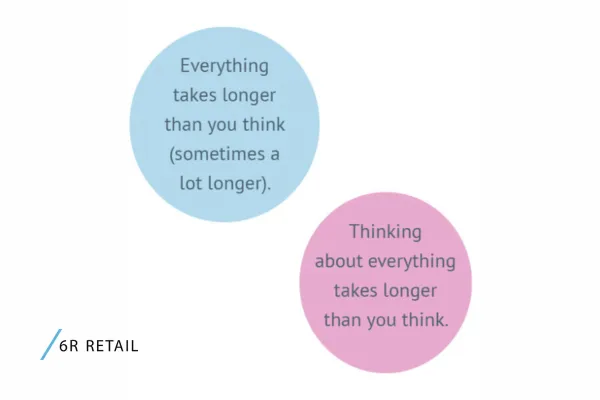
While every project is different, there are some ‘truisms’ that can be applied across the board, or at the very least to keeping a sense of humour whilst estimating for and engaging in projects. We have created this image of some truisms that have been around for quite a while.
Why Estimating Is About Managing the Unknown
However, it is often the case that we (and management types) expect estimates to have at least an 80/20 degree of positive accuracy.
Variations from the estimate need to be explained. Smaller variations are easier to dismiss or explain.
One of the ‘truisms’ comments on the optimism of software engineers when estimating.
They are ‘REALLY optimistic’ when it comes to estimating.
They are not alone.
Why We Are Naturally Over-Optimistic When Estimating
There’s a great exercise on the Coding Horror blog (extracted from McConnell's book ‘Software Estimation: Demystifying the Black Art’) which invites us to estimate, to a 90% confidence level, a range of things like the surface temperature of the sun and the box office receipts for the movie Titanic.
Think your estimating skills are good?
Give it a try here.
How did you go?
If you’re anything like me, you’re wildly off.
What the exercise reveals is that, for the most part, humans (myself included) are reluctant to put forward a wide enough estimate to contain an accurate answer, even when in unfamiliar territory.
How funny of us! Even when we know we don’t know, we still tend to put forward a range that is too narrow.
How Much Variance Is Reasonable in Project Estimates?
It’s not really reasonable to say that a PLM implementation will take between 4 and 100 weeks. As a general rule, customers are looking for a greater degree of accuracy than that.
When working on projects in the retail space, we are in familiar territory, we can estimate with a much more confident degree of accuracy how long a task is likely to take us. All well and good.
Why Client Effort Is the Hardest Part to Estimate
At the beginning, we know nothing about each other.
Or as close to nothing as is useful when it comes to estimating time frames.
We might know things about how the customer is in other parts of their business and apply these to the project, but this is not a reliable gauge of the time taken.
The thing is that at the beginning, we have a set of assumptions, and they are usually positive.
How Estimating Improves With Experience and Review
But it takes some practice and familiarity with the subject and people involved.
It also takes some effort to truly understand what is in and out of scope.
Most people have their own ‘frame’ through which they see the work they need to get done; consulting and cooperation with team members is key to gaining ownership over estimates.
When we have a lot of uncertainty, then the estimation range should be wider if it’s going to include an accurate answer.
The more effort that is put into the planning phase of a project, the closer we are likely to be to the estimates.
The key here is to keep estimating and reviewing and reviewing and estimating. As with many things, practice makes perfect, if not, at least a more accurate estimate.
Why Human Behaviour Complicates Project Estimates
Expectations of project estimates are usually that they will be accurate to an acceptable (i.e. explainable) range.
But it’s really difficult to estimate how humans will react to some things… they can get distracted and disillusioned.
Especially when the expected time to do something turns out to be wildly inaccurate.
At 6R, we are dedicated to working with our customers to create estimates and plans that fit in with the already important business-as-usual part of work.
As the ‘rules’ or ‘truisms’ say Project management is a full-time job, and then some.
If you don’t have the capacity or skills in your team, we can help with a range of services from supporting and working with internal project management, to project office set up and tools and templates to assist you to get your project over the line.
Design Reporting and KPIs into the System From Day One
Start with reporting; show the software supplier what you want to get out of the system. You can’t get information OUT of a system unless it goes IN somehow.
Makes sense, right?
Pick your 3-5 most important reports for each area and make sure you can get them from the system. Make sure you understand what needs to go into getting the reports out.
The whole lifecycle of information capture needs to be considered. What works for the webstore team may not work for production or logistics.
What the marketing people want to see is not the same as how finance wants to look at things.
If a system is going to touch every part of your business, you need to have a representative from every part of the business with some skin in the game
Choosing the Right Fashion Systems Partner for Long-term Growth
Not only are you choosing something that is supposed to work with the functional areas of your business, but you are also choosing a business partner; people who you will need to work with initially to get the system(s) in, but also ongoing as business changes.
The attitude to future development and support is something that I encourage businesses to consider; sometimes attitude can make all the difference to solving a problem, and you want to work with a partner who ‘gets it’.
Are these people specialists in your business sector?
Do they have a proven record of being able to deliver?
Are they in it for the long haul?
What developments are they working on to meet the ever-changing needs of technology?
To be able to make these choices really clearly, you need to be in a place of clarity about where your business is right now, and where you want to take it over the next 3-5 (or more) years.
So preparation is key; it’s a lot easier to select a good fit for your business if you are clear about what you want to achieve and what’s next for you.
Retail improvement, made practical.
Leadership thinking that drives change.
Sign up to receive new articles and strategic guidance.


