
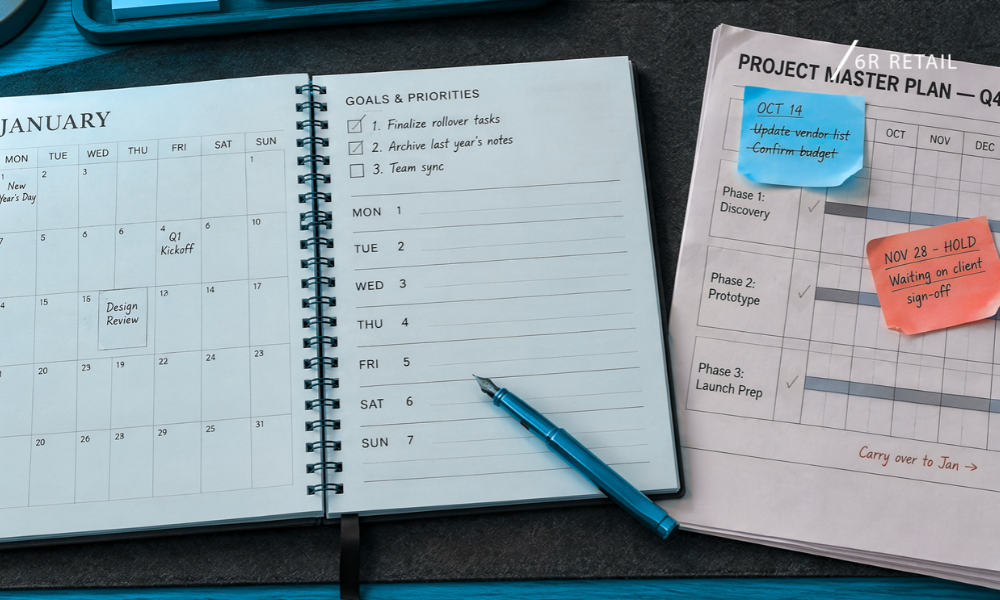
How to Restart a System Project in January (Without Last Year's Problems)
Starting 2027 strong
There's a particular energy in the first working weeks of January. New budget, new year, a clean page in the planner. Someone puts "project restart" in the calendar and it feels like a fresh start.
Then the first steering committee meets, and the same three risks are on the register from last year. The design decision from October is still open. Two of the business leads are on leave and the vendor has a new project manager.
The calendar changed. The problems didn't..
The short answer
January won't magically reset your project. People will. When they make a considered decision about what's true for the project now and what they're choosing to carry forward into the new year.
Before you break for Christmas, make three lists with the people who'll restart the project: what you'll keep, what needs to reset, and what you'll stop. Then plan 2027 from those lists and from how this year actually went, not from the plan that came out of the last strategy off-site.
Why a new year feels like a fresh start
That January energy is real, and it's useful. Researchers Hengchen Dai, Katherine Milkman and Jason Riis called it the "fresh start effect". In a 2014 study in Management Science, they found that gym visits, searches for "diet" and commitments to pursue goals all rise after what they call temporal landmarks, including "the outset of a new week, month, year, or semester". Their explanation is that these landmarks create new "mental accounting periods" that "relegate past imperfections to a previous period" and help us take a big-picture view.
That's an opportunity not to be squandered. A new year gives a leadership team permission to look at a project with fresh eyes.
It's also a risk. If last year's problems feel like they belong to last year, it's tempting to leave them there. But an open decision, a capacity gap or a disagreement between two executives doesn't magically reset at midnight on 31 December. It comes with you, until someone deals with it.
New year plans are usually too optimistic
The second trap is the plan itself. Roger Buehler, a psychologist who studies the "planning fallacy", explains that people tend to "take an 'inside view' in which they focus on the specifics of the task at hand", and overlook how similar work went in the past, partly because they feel the past isn't relevant to the new task.
On a system project, the past is the most relevant evidence you have. How long did decisions actually take this year? How many days a week did your subject matter experts really give the project, in practice? How often did the vendor's dates move? A 2027 plan that ignores those answers is a wish list.
Three lists before Christmas
Get the people who'll restart the project in January together before the break. An hour is enough if you've done the pre-freeze work. Make three lists (naughty, nice and reset).
1. Keep
What's working and needs to keep going? The decisions that are made and holding. The parts of the build that are done and tested. The ways of working that helped: the weekly decision meeting, the vendor check-in that actually surfaces problems.
Name them, so January protects them instead of reorganising them.
2. Reset
What needs a different answer or approach in 2027? Usually it's some mix of:
Dates that were set before capacity was tested and understood.
Decisions that were made but haven't held, or were never really made.
Roles: who owns the outcome in the business, who makes which calls, and what each party is accountable for.
Capacity: the honest number of days people can give the project alongside business as usual. Plan on 80% of it, all being well.
Reset doesn't mean start again. It means changing the parts of the plan that were never going to work, while you still have a choice.
3. Stop
What will you stop doing, or stop expecting, in 2027? The status meeting nobody reads the minutes from. The "nice to have" features that crept in at the halfway point. The assumption that the same people can run the project and their day jobs both at full speed.
This is the hardest list, and the one most teams skip. It's also where most of the capacity for next year comes from.

Where this fits in 2027 planning
Grant Thornton Australia's outlook for retail, published in October, framed the challenge for 2027 as choosing where to compete, where to invest and what kind of organisation it takes to deliver.
Kirsten Ridgway, their Head of Retail and Consumer Products, said leaders need to be clear "about what they want the business to be known for and whether the operating model, people and technology support that ambition."
A system project sits right in the middle of that question. If it's going to support what the business wants to be in 2027, its restart deserves the same honesty as the budget.
When a restart needs more than a planning session
Most projects can do this themselves. If the three lists are short, people broadly agree on them, and the reset list has clear owners, you don't need outside help. You need an hour, a whiteboard and the follow through.
It's worth considering a Project Delivery Reset when:
People disagree about what's true now, not just about what to do next.
The reset list is long and nobody has the authority to settle it.
Something underneath the project has changed: a restructure, a new sponsor, a shift in strategy.
You've restarted before and ended up back in the same place.
A reset establishes what's true now, whether the outcome still matters, and what path forward is credible with the decisions, people and capacity you actually have. It doesn't promise a perfect project, and it doesn't have to lead anywhere else: sometimes the best result is a team that leaves the room able to carry on without help. January, before the year's pressure builds, is a natural time to do it.
Common questions
How do I restart a stalled system project in January?
Start from what's true now, not from last year's plan. Before Christmas, agree what to keep, what to reset and what to stop, then build the January plan from those lists and from how this year actually went.
Is the new year a good time to reset a project?
It can be. Research on the fresh start effect shows new-year landmarks make people more willing to pursue goals. The risk is assuming last year's problems stayed in last year. Use the energy to deal with them, not to skip them.
Should we re-baseline the project for the new year?
Only after you've decided what needs to reset. Moving the dates without changing the decisions, roles or capacity behind them usually turns a red status green for a few months, then red again.
How do we stop next year's plan being too optimistic?
Use this year's evidence. How long did decisions take, how much time did people really give the project, and how often did dates move? Plan from those numbers, not from what you hope will be different.
Before you break for Christmas
If you'd like a starting point for the conversation, take The Project Undercurrent with the people who'll restart the project. It's 12 statements, about five minutes, and your result shows which undercurrent is running (Alignment, Action or Accountability) and where to look first. Compare your answers and bring them to the first meeting in January.
If you'd rather talk it through, you can read more about a Project Delivery Reset or book a 25-minute call with me.
Retail improvement, made practical.
Leadership thinking that drives change.
Sign up to receive new articles and strategic guidance.


